After vibe coding,
vibe marketing.
What happens to marketing teams when anyone can build the assets and run the media?

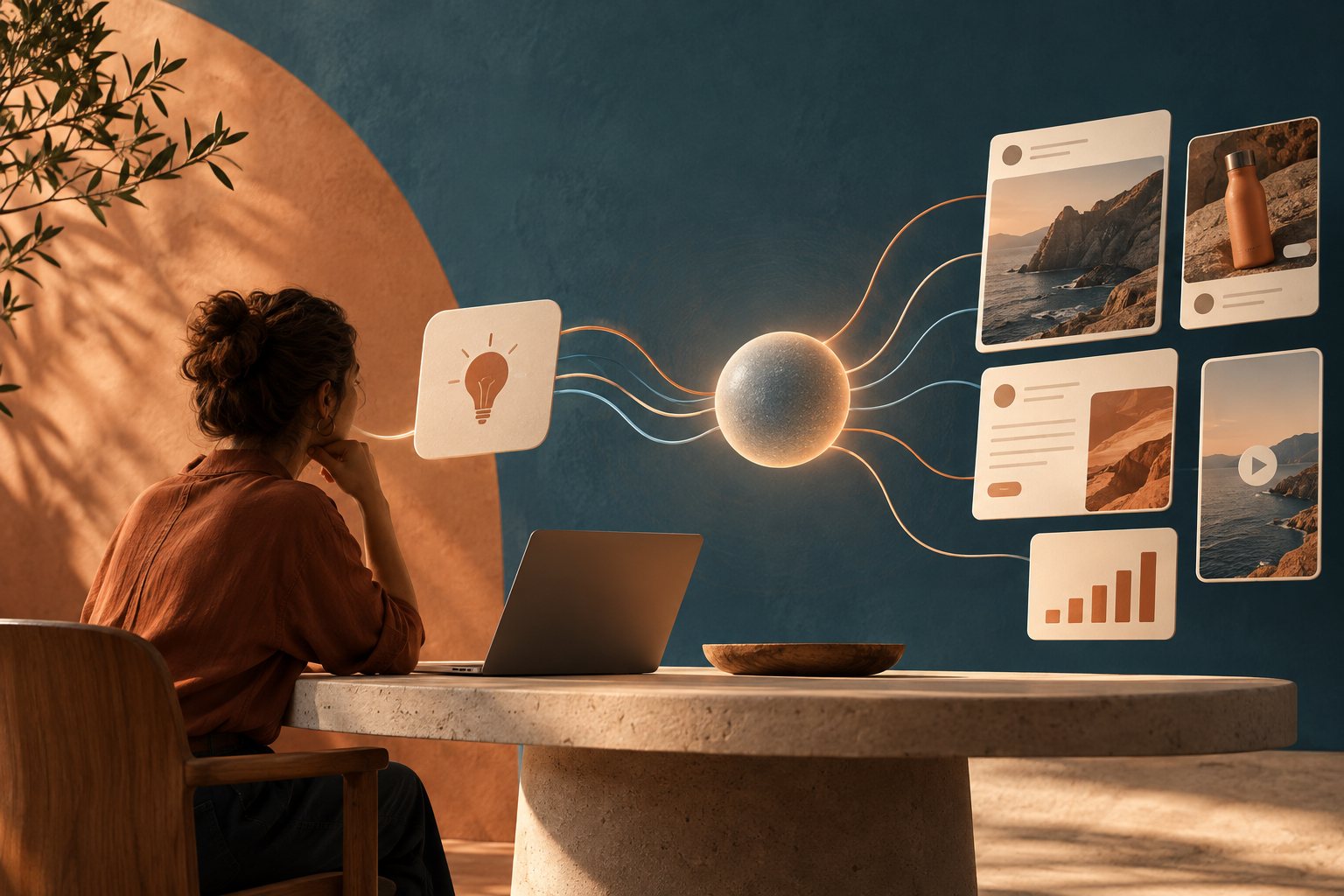
In one of my sessions at The Valley, one idea stayed with me: after vibe coding comes vibe marketing.
In February 2025, Andrej Karpathy coined the term “vibe coding”: you describe what you want, and AI writes the code. Vibe marketing applies the same logic to our work. A marketer describes the idea, and AI tools build the creative assets and run the media plan, without a design studio or a media team in between.
This is no longer a thought experiment. Meta wants brands to be able to upload a product image and a budget, and let AI create the ad, the copy and the targeting, by the end of 2026. Mondelēz built its own generative AI content platform and says it can cut content production costs by 30% to 50%.
After years leading marketing teams, here is what I believe this changes, and what it doesn’t.
- 01Production gets cheap. Judgment doesn’t.When every asset is one prompt away, the scarce skill becomes knowing which idea deserves to exist.
- 02Inputs become the work.AI is only as good as the brand strategy, insights and guidelines you feed it. Weak inputs give generic output.
- 03It is not hands-off.Christopher Penn put it well: done right, vibe marketing is “more like being a true manager of an employee.” Someone still briefs, reviews and decides.
So the question for marketing leaders is not whether teams will shrink. It is what the team is for, once making things is no longer the bottleneck.
If your team could build every asset and run every campaign itself tomorrow, what would you stop doing? And what would you finally have time for?